
NYC speeding cameras work: New study finds reduction in collisions and injuries
They're also remarkably lenient--only $50 fines and no points

Hi folks,
We have a new study published in the Proceedings of the National Academy of Sciences!
We studied NYC’s speed camera program and found that it significantly reduced collisions and injuries near intersections with cameras. We saw reductions for 7 months following camera activation. The study isn’t open access yet, you can read the accepted version here.
NYC’s speed cameras are remarkably lenient: violations carry a flat $50 fine with no points (compared to hundreds of dollars and 3-11 points for police-issued tickets). They are also limited to school zones. Even so, we observe large safety benefits.
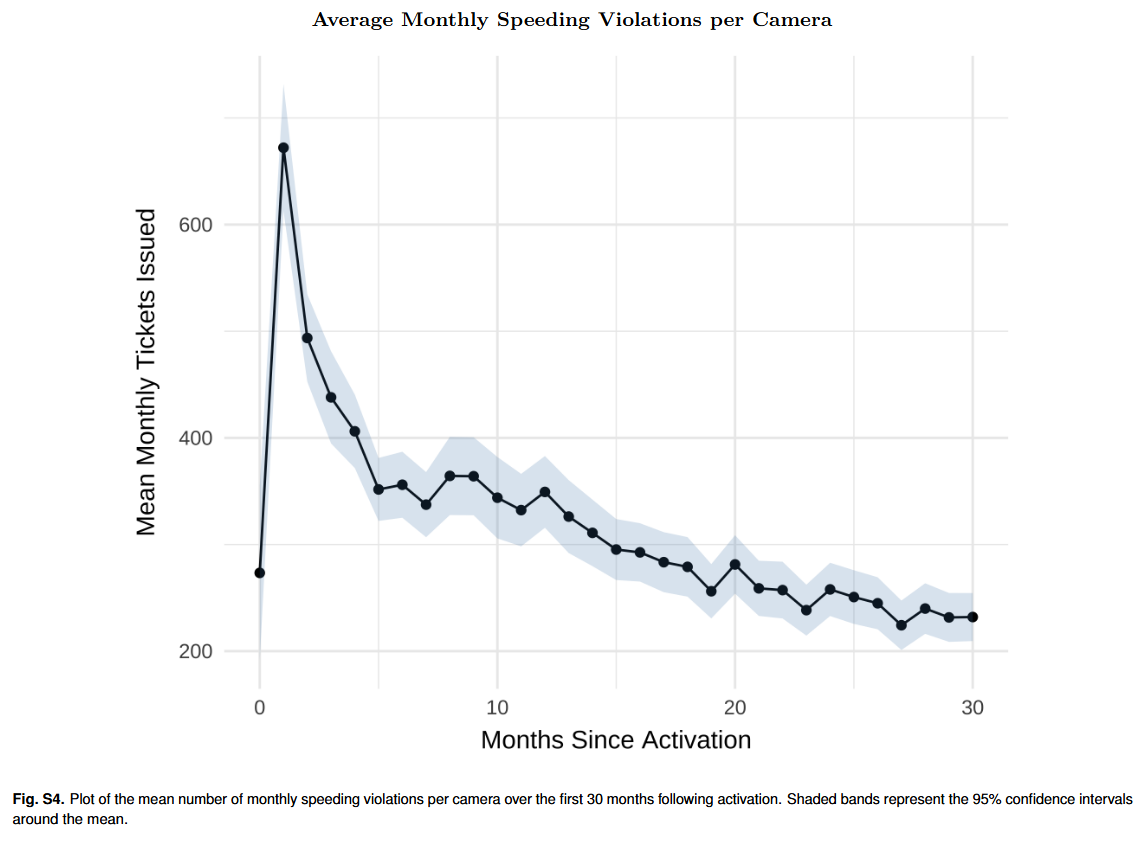
When cameras are installed, they issue many violations in the first month, followed by a steep decline in the second month. This suggests that the cameras effectively deter speeding by changing underlying driver behavior rather than relying on sustained revenue extraction.
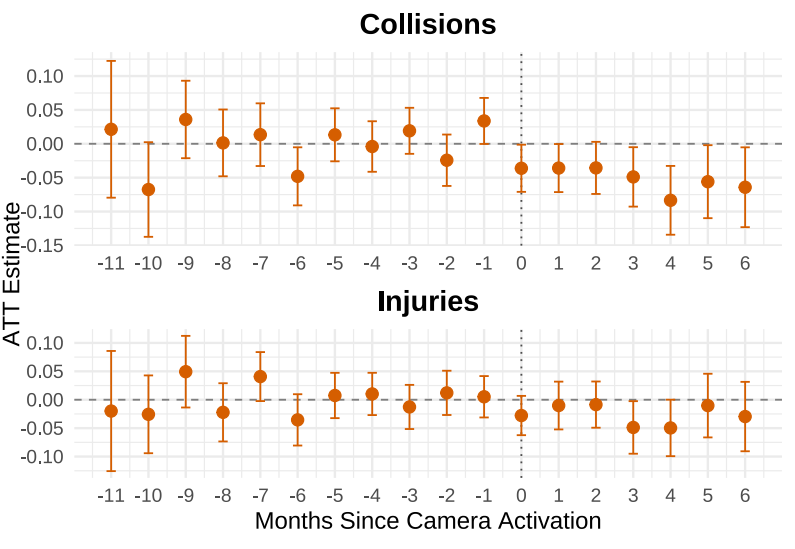
Although many studies evaluate traffic cameras, very few apply causal inference methods. Some scholars who implement stronger designs argue that they eliminate the observed safety benefits of cameras. Yet we find substantial effects using the Callaway and Sant’Anna difference-in-differences estimator.
Automated enforcement provides important benefits. Cameras swiftly impose certain sanctions for reckless driving without the risk of human bias (i.e., racial discrimination). And unlike police traffic stops, speed cameras do not carry the risk of escalation into arrest or violence.
Our study suggests that cameras can be one component of effective and equitable traffic safety policy. If cameras were allowed to be installed outside school zones, or if camera tickets could impose points, NYC might see even larger safety benefits.